The vast Cagayan Valley is a spelunking haven waiting to be explored. This is because in all of the region’s valley provinces—Nueva Vizcaya, Isabela, Cagayan, and Quirino—there’s at least one cave worth visiting.
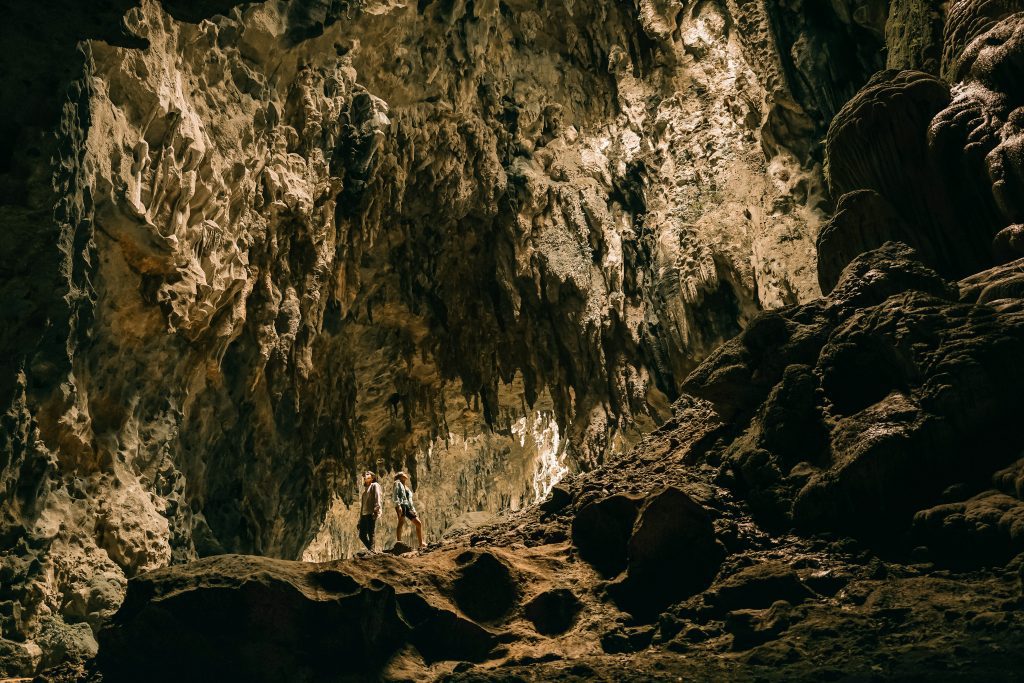
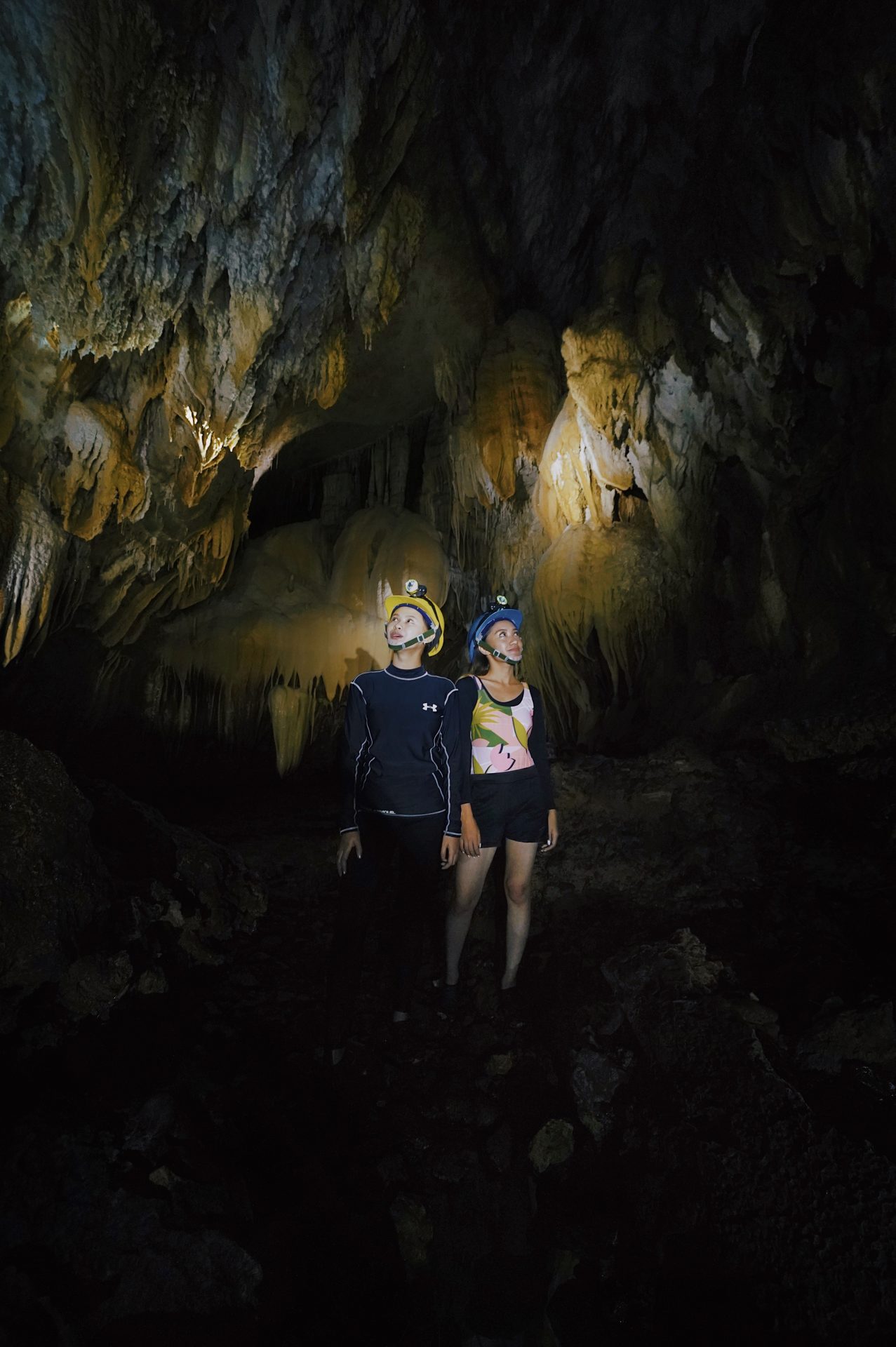 Nueva Vizcaya’s Capisaan Cave features curtain-like limestone formations. Photo by SinoPinas courtesy of the Department of Tourism.
When in Cagayan Valley, go on a spelunking adventure and explore these caves.
Day 1
Callao Cave (Cagayan)
Located in the western foothills of the Sierra Madre mountain range, Callao Cave is one of the 300 found in the barangays of Penablanca. These caves are the reason why the town got its Spanish name which, when translated, means white rock.
In 1935, Callao Cave and the 192-hectare area surrounding it became a national park, one of the earliest in the country. Today, the cave, named after the Kalaw bird endemic to Sierra Madre, is part of the enlarged 118,000-hectare, present-day Penablanca Protected Landscape and Seascape (PPLS).
Most recently, the National Museum officially declared the cave as an “important cultural property of the Philippines” for the exceptional cultural, artistic, and historical significance of the discoveries inside it.
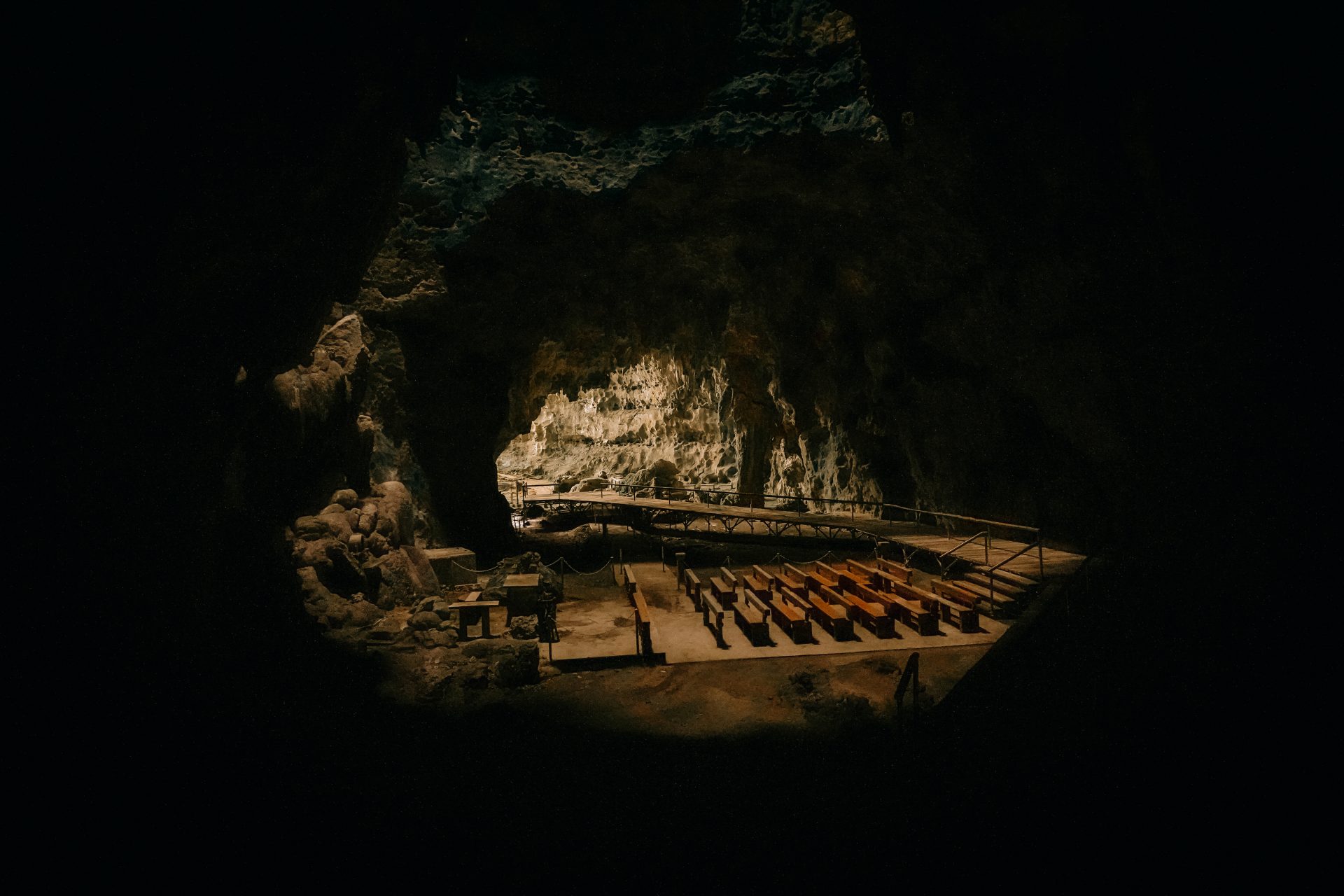 The second chamber of Cagayan’s Callao Cave features a church complete with an altar and wooden benches for mass attendees. Photo by SinoPinas courtesy of the Department of Tourism.
Stalactites, or icicle-shaped formation that hang from the ceiling, and stalagmites, or an upward-growing mound of mineral deposits are abundant inside the cave.
It has seven chambers. The Aviary Room is home to the balinsasayaw or swiftlets. The Chapel, which is set up inside the cave, features a rock formation serving as the altar with a figure of Our Lady of St. Lourdes and a natural skylight illuminating the long wooden benches for mass attendees.
The Dark Room, called such because it barely gets any light, is a chamber featuring flowstones, glittering dripstones, cave curtains, crystal helictites, and columns sparkling brightly in the dimly-lit portion of the cave.
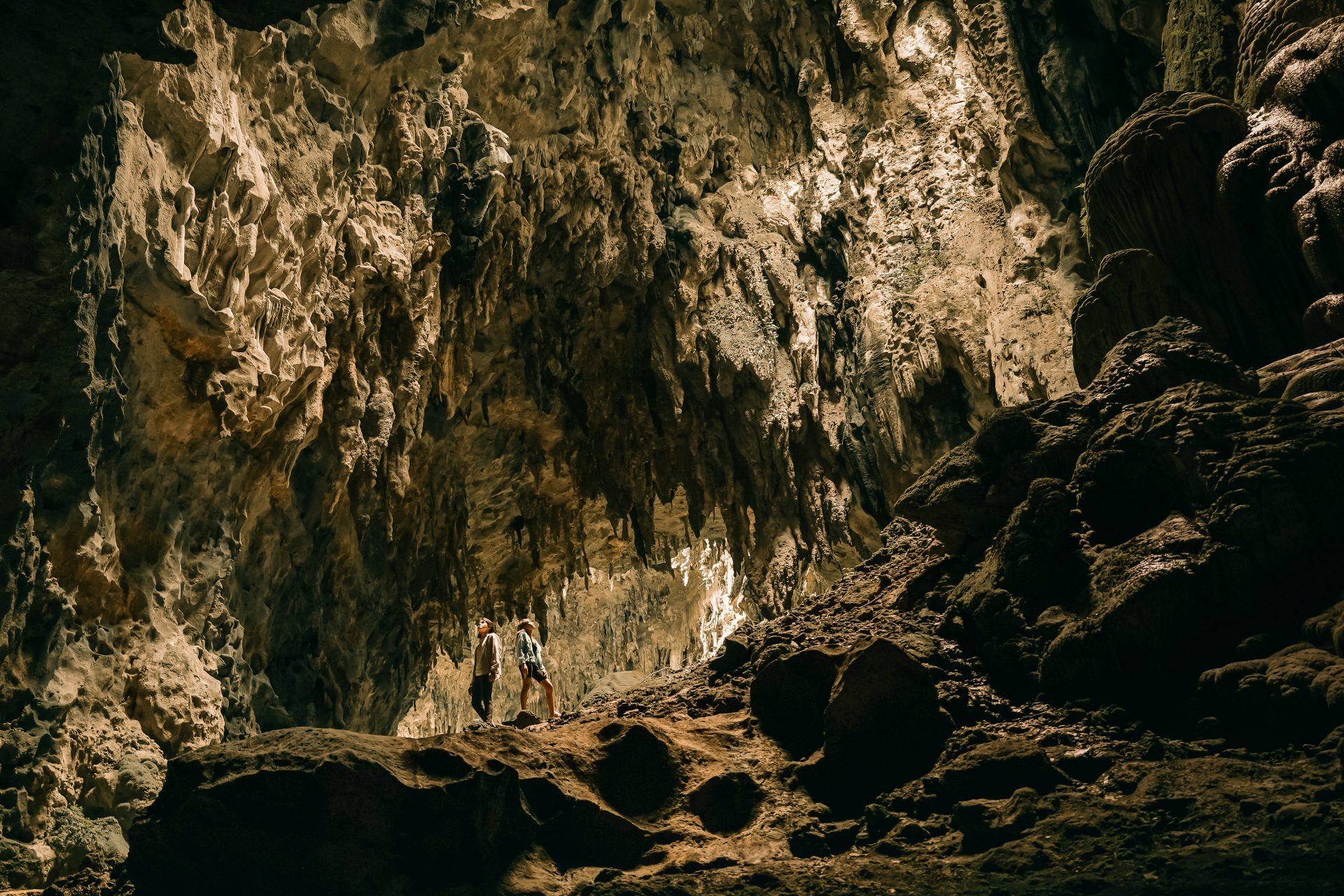 Portions of Cagayan’s Callao Cave are brightly-lit, thanks to its natural skylights. Photo by SinoPinas courtesy of the Department of Tourism.
The Cream Room gets its name from a notable formation that resembles a melting ice cream made more visible through the cave’s second natural skylight. Other notable formations at the fourth chamber include what seems like the head of an elephant, a lighted candle, and a heart-shaped stalactite
The fifth chamber, called The Jungle, is teeming with plants while another natural skylight brightens up the area. There’s no shortage of interesting formations here, which includes a mushroom-shaped and coral reef-like stalagmites, and even a skeletal system’s skull, eyeball, nose, and mouth. Singapore’s famous Merlion figure has seemingly found its way inside Callao Cave, too, except there’s no water coming out of its mouth.
Meanwhile the sixth and seventh chamber, called The Danger Zone and The Dead End, respectively, are now off-limits to visitors for safety. From the fifth chamber, however, the remaining two chambers feature more rock formations and patches of greenery.
Callao Cave’s significance, however, stems from the discovery of a previously unknown human species at the first chamber. Approximately 67,000 years old, Dr. Armand Mijares and a team from the University of the Philippines, unearthed seven teeth and six bones from the feet, hands and thigh of at least three individuals.
In 2019, it was confirmed to belong to a now extinct human subspecies. It was named after its discovery site: Homo luzonensis or Callao Man.
In 2021, Mijares and the team found fossils yet again. This time, a previously unknown giant rodent called cloud rat or locally, buot or bugkon was discovered. Unlike rats typically seen in homes, these rodents are much like squirrels who live in trees and have tails that can grow to as long as 13 inches.
These cloud rats are believed to have lived alongside Homo luzonensis , but two species went extinct 2,000 years ago.
The tour inside Callao Cave takes 45 minutes to an hour and costs Php50 for the entrance fee.
At present the Penablanca Protected Landscape and Seascape (PPLS), which is under the management of a Protected Area Management Board (PAMB) led by the Department of Environment and Natural Resources (DENR).
Day 2
Santa Victoria Caves (Isabela)
Part of the 819-hectare Fuyot Springs National Park, a protected area, the Santa Victoria Caves are a series of limestone caves at the foothills of the Sierra Madre mountain ranges.
It is widely believed that nomadic Agta or Dumagat people occupied it in the past.
Currently, exploring it is one of the many ecotourism activities offered at the Ilagan Sanctuary, which is a 200-hectare reserve park.
Guests must go on a tree top adventure, which involves walking on a hanging bridge with seven stations featuring endemic tree species. This leads to the over 12 limestone caves that make up the Santa Victoria Caves. Three are currently open to visitors: Main Cave, Altar Cave and Adventure Cave.
Inside these caves are various rock formations, which can be seen up close through relatively dry walk-through caverns, as well as a waterfall.
Apart from an entrance fee (Php100), a vaccination card as proof of inoculation must be presented.
Day 3
Aglipay Caves (Quirino)
Found within the hills and forests of Aglipay in the province of Quirino, Aglipay Caves is a network of eight limestone caves with a total of 37 interlinked chambers.
Initially discovered in the 1970s, Aglipay Caves was opened as an eco-tourism destination in the 1980s.
Today, six chambers are open to tourists and run as deep as 20 meters.
A big cathedral-like chamber can be seen upon entry to the caves, revealing a variety of stalagmite, stalactite, and other limestone formations.
Notable formations include a calcite structure that looks like the Banaue Rice Terraces, and a three-stalagmite tableau that resembles a wedding with a bride, a groom, and an officiating priest.
Further into the cave, more rock formations can be seen, including those that resemble snakes and rollercoasters. There’s also an underground spring.
Going deeper into the cave, the exploration becomes more challenging. Guests will have to duck, walk, crawl, and climb through muddy paths, and gaps as the spaces get tighter. Exiting the cave involves climbing up a slippery 26-rung ladder in dim light.
Entrance and exploration of Aglipay Caves for an hour or so, depending on the guests’ pace. There is a Php25 entrance fee. The caves, along with the nearby campsite, spans 101 hectares overall.
Day 4
Capisaan Cave (Nueva Vizcaya)
Over 57 kilometers away from the provincial capital, Bayombong, the multi-chamber Capisaan Cave system is located at the Municipality of Kasibu, in a limestone-rich barangay of the same name.
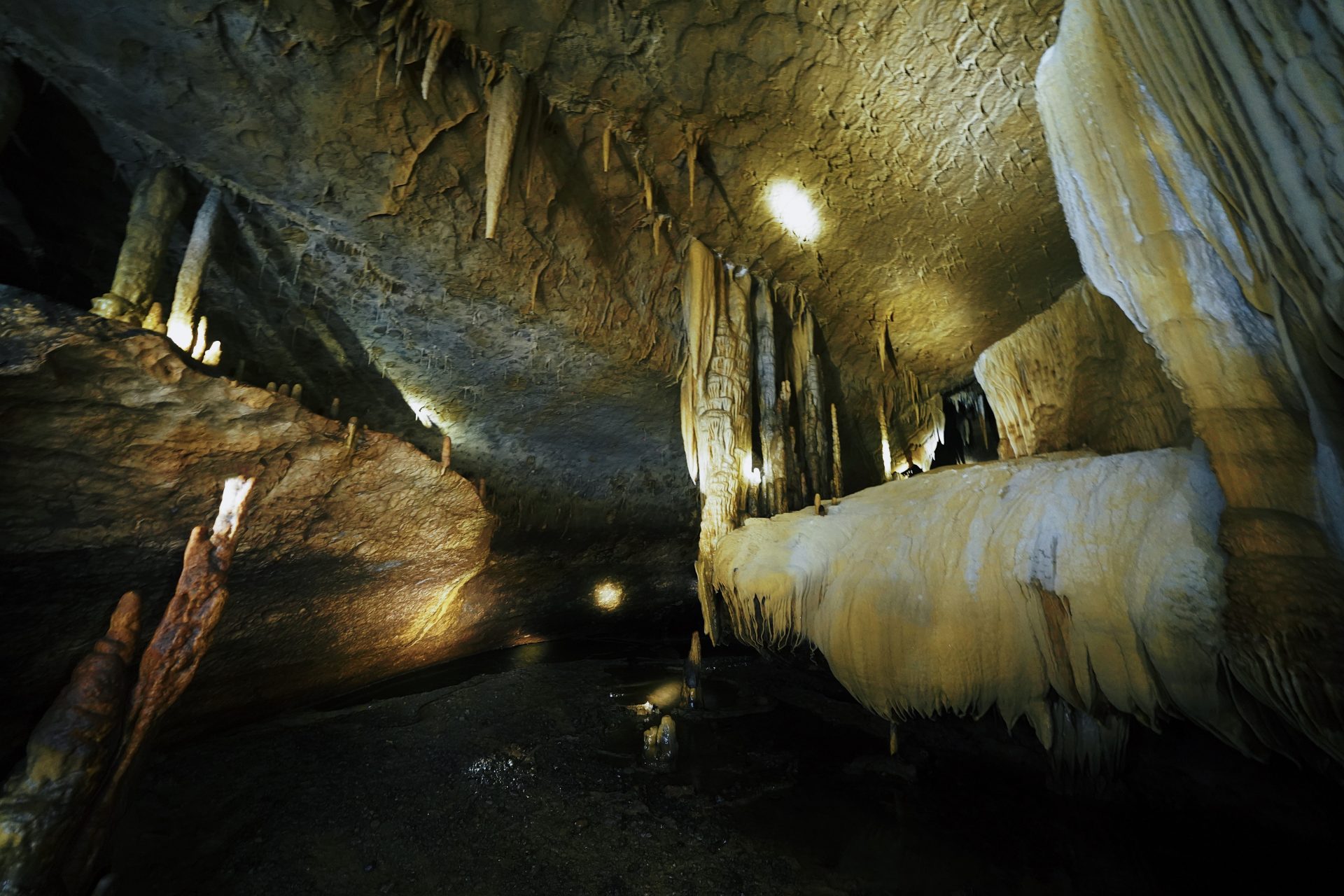 Unique limestone formations fill Nueva Vizcaya’s Capisaan Caves. Photo by SinoPinas courtesy of the Department of Tourism.
Bat hunters were the early visitors of the cave but it was only in 1999, following an extensive exploration of the cave, when its potential as a spelunking destination was discovered. Capisaan Cave, with a total passage length of 4.2 kilometers, is the fifth longest cave system in the country.
With a total area of 1,515.96 hectares, Capisaan Cave houses rock formations that resemble curtains, solid waterfalls, pillars, columns, islands, castles, and even human figures.
Two segments of the Capisaan Caves have been classified as Class I, which means that there are delicate and fragile geological formations in the area.
This is also indicative of the cave’s threatened species, archeological and paleontological values, and extremely hazardous conditions. Mapping, photography, and educational and scientific purposes are its allowable uses.
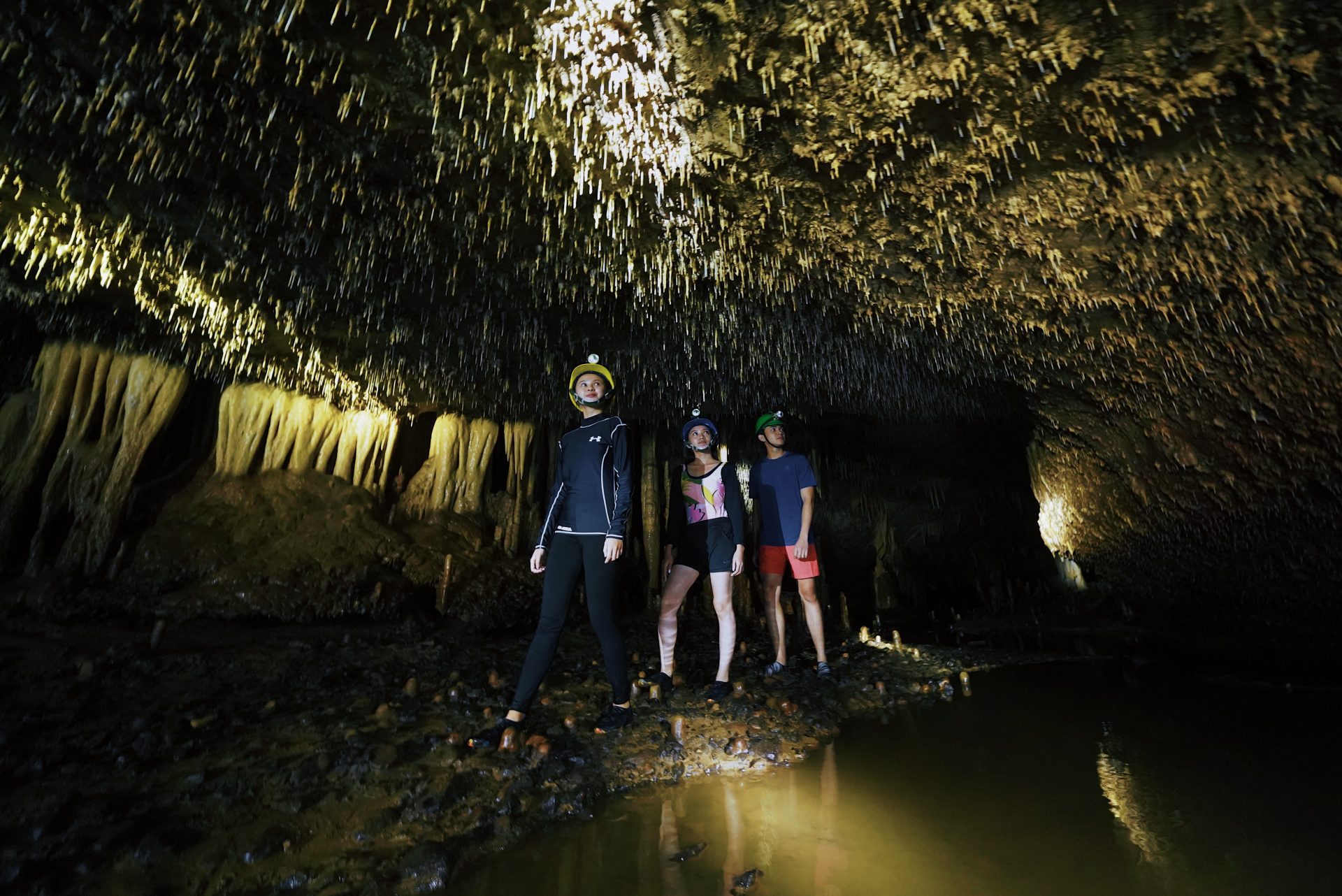 Nueva Vizcaya’s Capisaan Cave houses a subterranean river. Photo by SinoPinas courtesy of the Department of Tourism.
Another segment has been classified as Class II. These areas have sections with hazardous conditions and contain sensitive geological, biological, archeological, cultural, historical and biological values or high quality ecosystems. These are the areas open for experienced cavers or guided tours.
The limestone cave is a karst, a type of landscape where the dissolving of the bedrock creates sinkholes, sinking streams, springs, and the like. Because of this, visitors can expect not-so-usual cave interiors once they begin the guided tour.
“Caves are all uniquely beautiful,” says Jerry Laroso, the chief guide at Capisaan Cave. “Unlike Callao Cave, which is dry and terrestrial, Capisaan has a subterranean river inside.”
Capisaan has nine known entrances, including the main entrances Lion, Alayan, and Sabrina, and three others in Barangay Malukbo.
These different cave openings are teeming with wildlife, too, including native and endemic species of plants and animals. There are a total of 91 plant species found in the said areas, 10 of which are endemic to the Philippines.
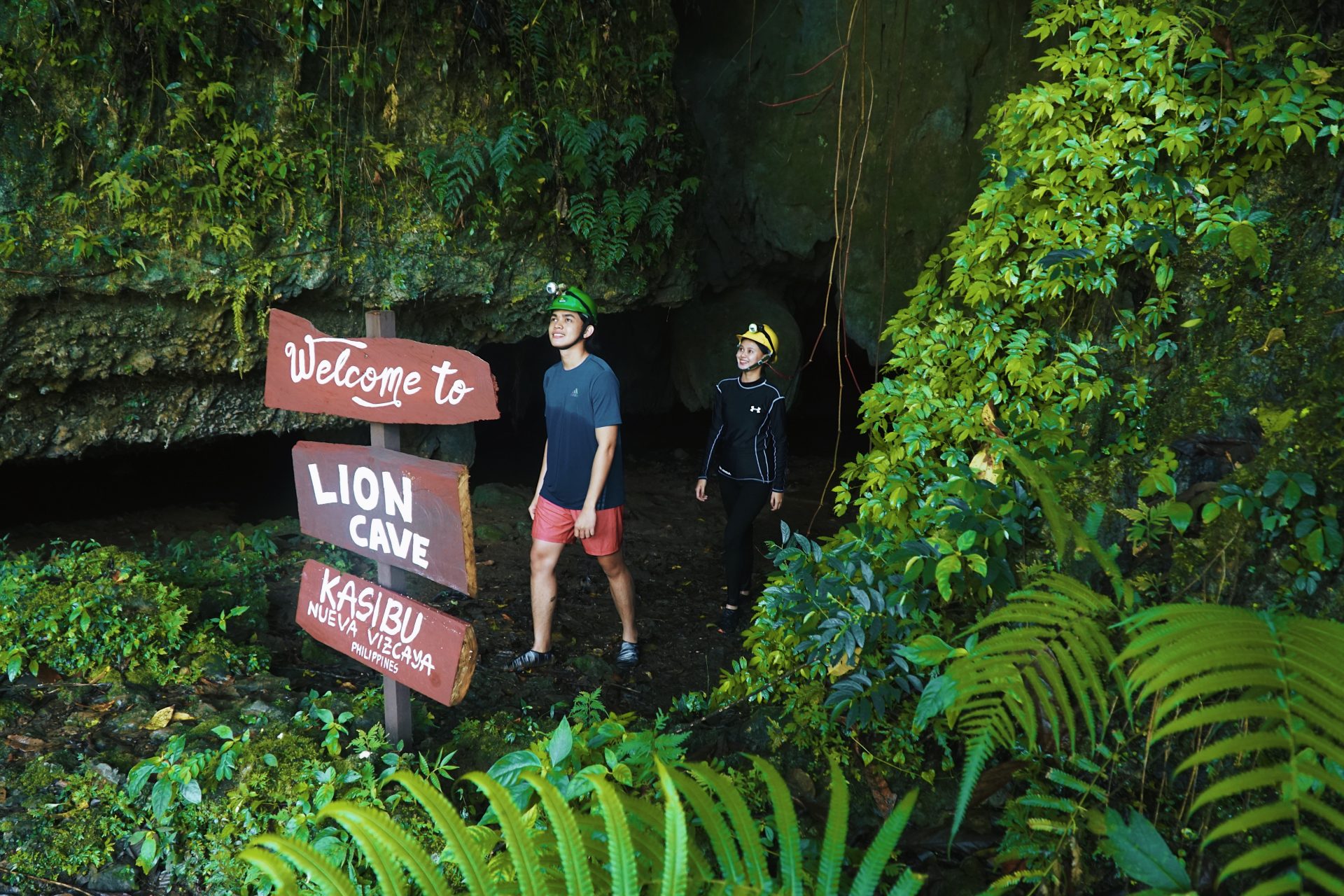 Plants thrive in Capisaan Cave’s Lion entrance. Photo by SinoPinas courtesy of the Department of Tourism.
Spiders, insects, and small crabs can be found thriving inside the cave. There are also snakes, frogs, lizards, and different kinds of fish, from orange carp and catfish to mudfish and wild guppy.
There are at least four different bat species dwelling in various sections of the cave. Meanwhile, a total of 931 birds from 61 species were recorded, 36 of which are endemic while eight are threatened.
As natural pollinators, both species are crucial in keeping the cave’s ecosystem thriving.
Currently, however, only the halfway routes are open to tourists for safety purposes.
Regardless of which route visitors will take, it’s a must to wear lightweight clothing that also covers the arms and legs to prevent scratches.
Guests can also bring their own but safety equipment is available for rent at Capisaan Cave: helmet (Php20), flashlight (Php30), life vest (Php30), and aqua shoes (Php30).
There’s also an entrance fee (Php100) and guests are required to present a negative swab test result and follow all safety protocols.
Stay Here
For accommodations, visit the official Cagayan Valley Tourism website, region2fun.ph , for the list of DOT-Accredited enterprises.
Outsource the Planning
For a seamless trip, you may leave the planning to DOT’s accredited tour operator in Region 2:
- Isabela
Pink Diamond International Travel and Tours
[email protected] ; http://pinkdiamondinternational.weebly.com/
- Quirino
Explore Quirino Travel and Tours
0916 635 9978; http://www.explorequirino.com/
- Nueva Vizcaya
[email protected] ; http://travelesqueph.wordpress.com/
Travel safely!
All tourist destinations in Cagayan Valley have health and safety protocols in place to protect locals and visitors alike. Everyone is expected to comply by wearing face masks, regularly washing their hands, and practicing physical distancing.
To check out up-to-date information regarding local destinations that are open and the safety protocols and requirements needed for each location, you may visit www.philippines.travel/safetrip or download the Travel Philippines app at app.philippines.travel or the Google Playstore.