Mindanao is a melting pot of culture, particularly of faith. This convergence forms the so-called Tri-People of Mindanao—Christians, Muslims, and the different indigenous communities.
This diversity can be clearly seen in the Zamboanga Peninsula or ZamPen. It is reflected in the various religions and indigenous beliefs of its people. It is no surprise then that the Peninsula has a number of significant places of worship from cathedrals to mosques.
Most indigenous people or IPs like the Yakan, Sama, and Subanen have already embraced either Christianity or Islam while still practicing folk beliefs. This resulted in what is called syncretism .
Indigenous beliefs that are still practiced include having sacred spaces that are unlike the usual man-made ones such as temples and churches. Called sacred shrines or spirit houses, they range in size from small roofed platforms to structures similar to a small house or a pagoda.
Other types of sacred places or objects for IPs are material manifestations of the realms of their deities. It can be a tree, termite mound, or an anthill. Also considered sacred are certain mountains, waterfalls, reefs, and caves.
Those traveling to ZamPen who would like to know more about the richness of Mindanao’s heritage may want to visit these churches and mosques.
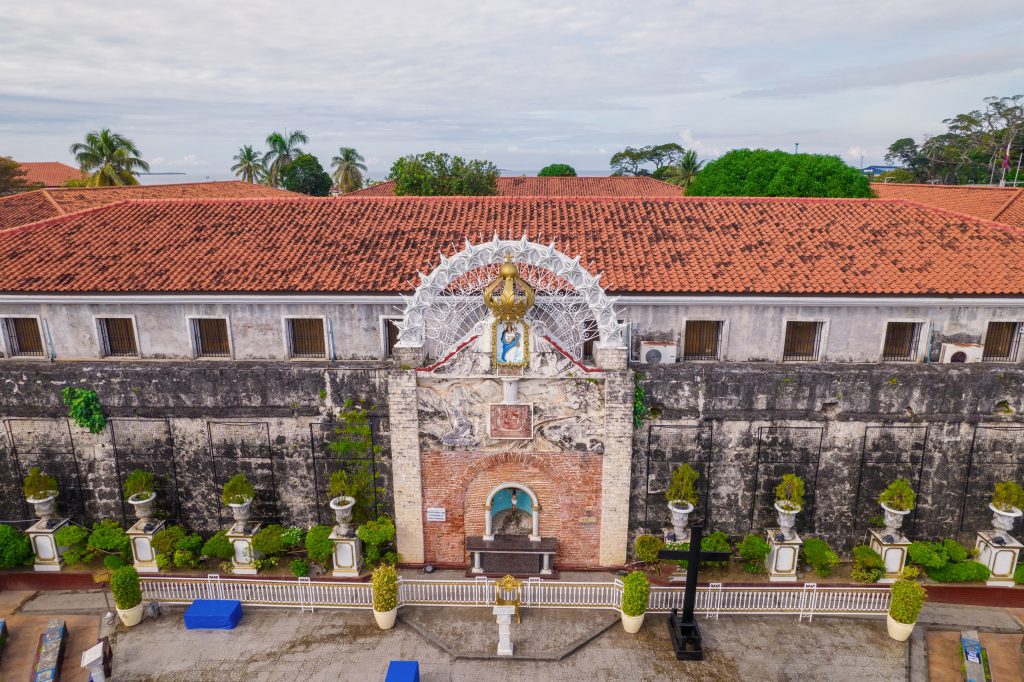
Fort Pilar Shrine, Zamboanga City
The fort was built in 1635 as a line of defense for Christian settlers against Moro pirates upon the request of Jesuit missionaries. The cornerstone was laid on June 23, 1635 and marked the founding of Zamboanga City, then known as Jambangan.
Outside the eastern wall of the fort is a Marian shrine dedicated to Our Lady of the Pillar, the city’s patroness. It has become a well-loved symbol of the harmony among the different faiths practiced by the people in Mindanao.
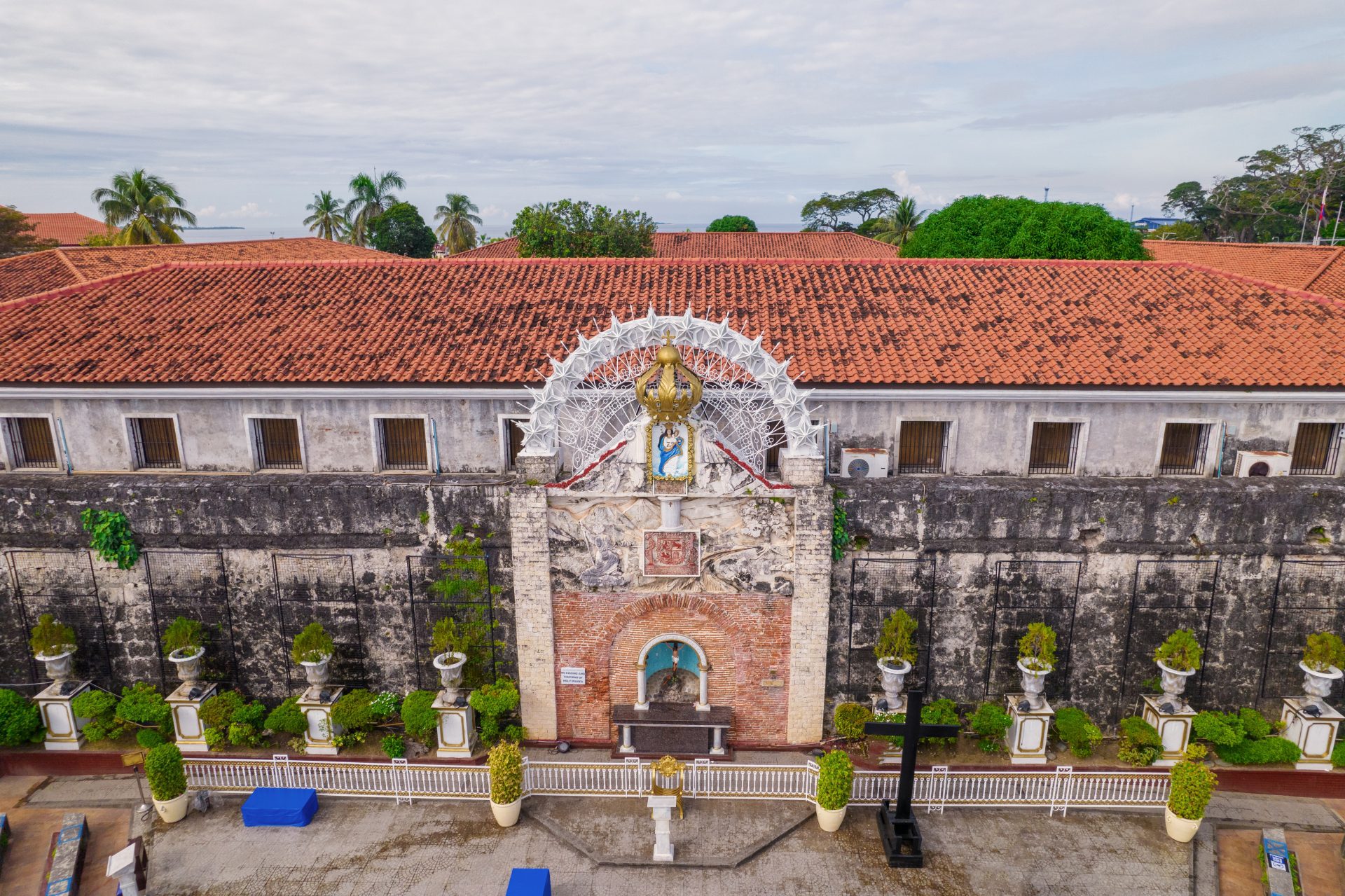 Fort Pilar Shrine is a symbol of harmony not only for Christians but for Zamboangueños of all faiths. Photo by Playground Films PH courtesy of the Department of Tourism.
It is not a rare sight to see Catholics, Muslims, and members of indigenous communities visiting the shrine to offer prayers. Some would leave objects that symbolize their wish as in pencil offerings from those praying for success in licensure exams.
Also inside Fort Pilar is a regional branch of the National Museum that exhibits the province’s cultural artifacts.
Taluksangay Mosque, Zamboanga City
This is the oldest mosque and the first center of Islamic propagation in the Zamboanga Peninsula. It was built in 1885 by Hadji Abdullah Maas Nuno in the coastal village of Taluksangay.
Its location meant that most of the worshippers which frequent it are Sama Banguigui, an ethno-linguistic group known to build their homes directly over the sea or along the shoreline.
Most of the furnishings inside Taluksangay Mosque were donated by wealthy residents of the community.
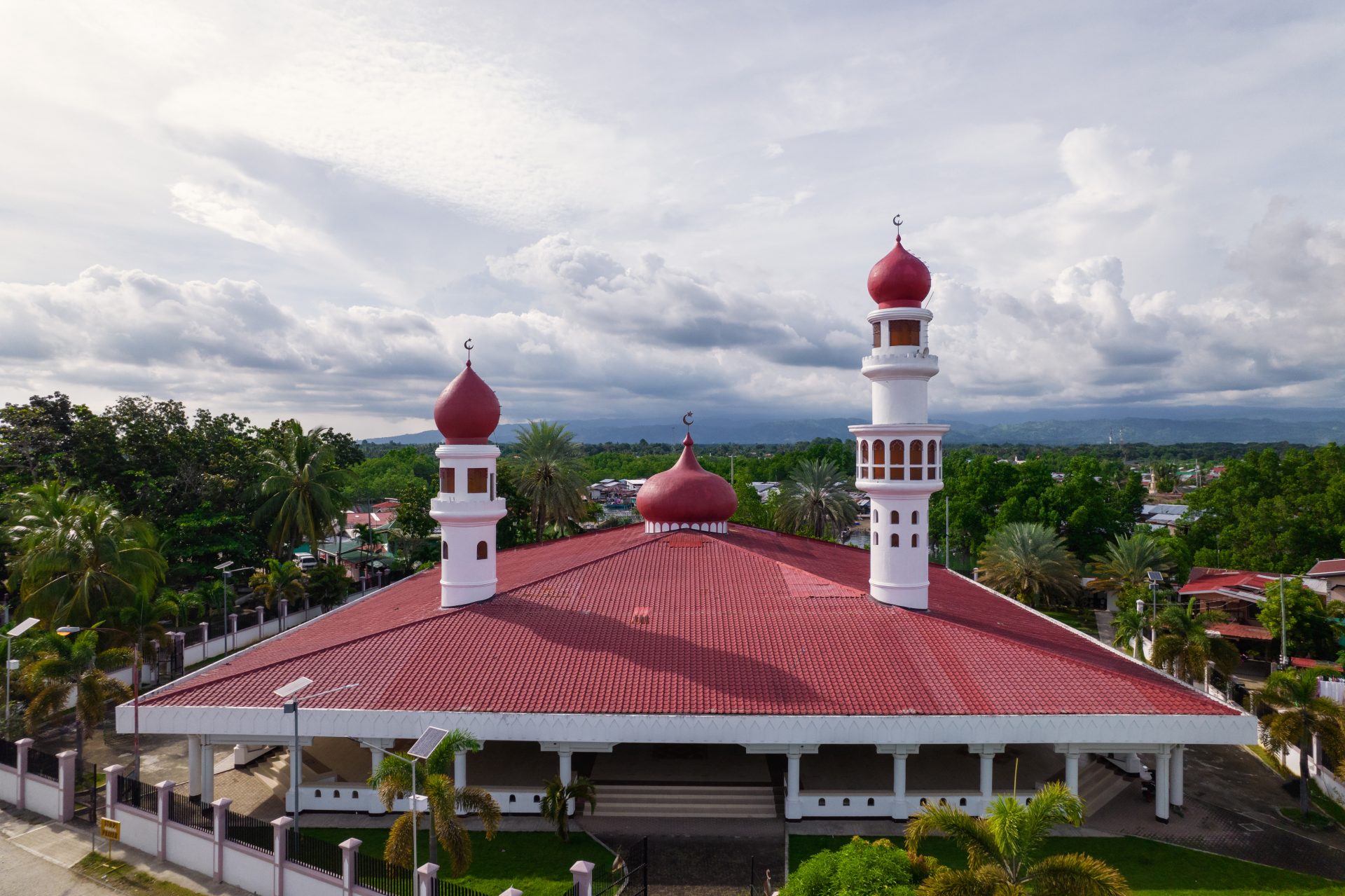 Taluksangay Mosque is the oldest mosque in the Zamboanga Peninsula. Photo by Playground Films PH courtesy of the Department of Tourism.
The barangay where the mosque stands is known to be historic. It is said that Muslim missionaries from Saudi Arabia, India, Malaysia, and Indonesia regularly flock to the village. In 1914, a representative of the Sultan of Turkey (Sheik-Al Islam) also paid the barangay a visit.
At the height of the Moro National Liberation Front or MNLF military conflict in 1973, members of the Quadripartite Committee, including then Generals Fidel V. Ramos and Romeo Espino, visited Taluksangay.
Our Lady of the Most Holy Rosary Cathedral, Dipolog, Zamboanga del Norte
Also called Dipolog Cathedral, this church was established by Spanish friars in 1894. Since then, the church has seen numerous renovations, the latest in 2009 when its façade was studded with earth- and cream-colored marble.
The present altar is a replica of the original retablo designed by José Rizal during his exile. All of these are underneath one of the church’s distinctive features—its ceiling made of Narra.
Church of Saint James the Greater, Dapitan, Zamboanga del Norte
This church was constructed in 1631 at the helm of Jesuit priest Pedro Gutierres. The present structure was originally built in 1871 using galvanized iron walls and wooden floors.
These were replaced with solid masonry for the walls and mortar for the flooring during a five-year reconstruction in 1904 to 1909. In 1915, the entire floor was concretized. Finally in 1964, almost the entire church was reinforced with concrete through the efforts of the local government and the locals.
Rizal heard mass every Sunday in this church during his four-year exile in Dapitan. A marker near the entrance where he usually sat was put up.
He also painted a backdrop inspired by a church in Barcelona for the altar. Unfortunately, the painting was destroyed in a fire.
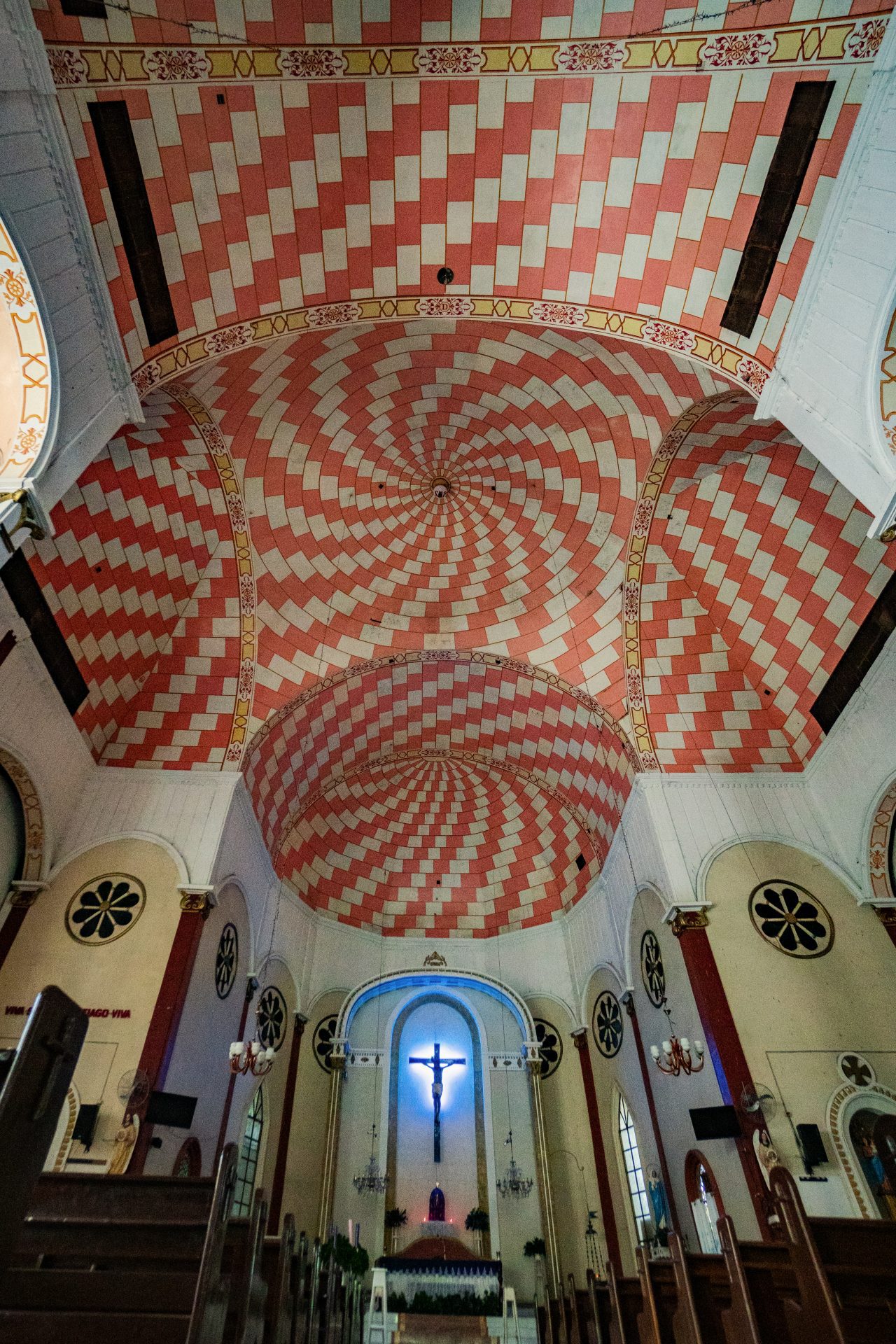 The Church of Saint James the Greater is known for its ties with José Rizal and its distinctive ceiling. Photo by Playground Films PH courtesy of the Department of Tourism.
Aside from its ties to the country’s National Hero, the church is also known for its unique ceiling. Orange and white rectangles form a swirling pattern, creating an illusion of depth and motion.
Masjid Al -Islamia or Rainbow Mosque , Zamboanga City
As the name implies, the mosque is known for its vibrant exterior with the colors symbolizing peace. It was initially dedicated to the Marawi Siege, a structure that symbolized a call for peace and goodwill.
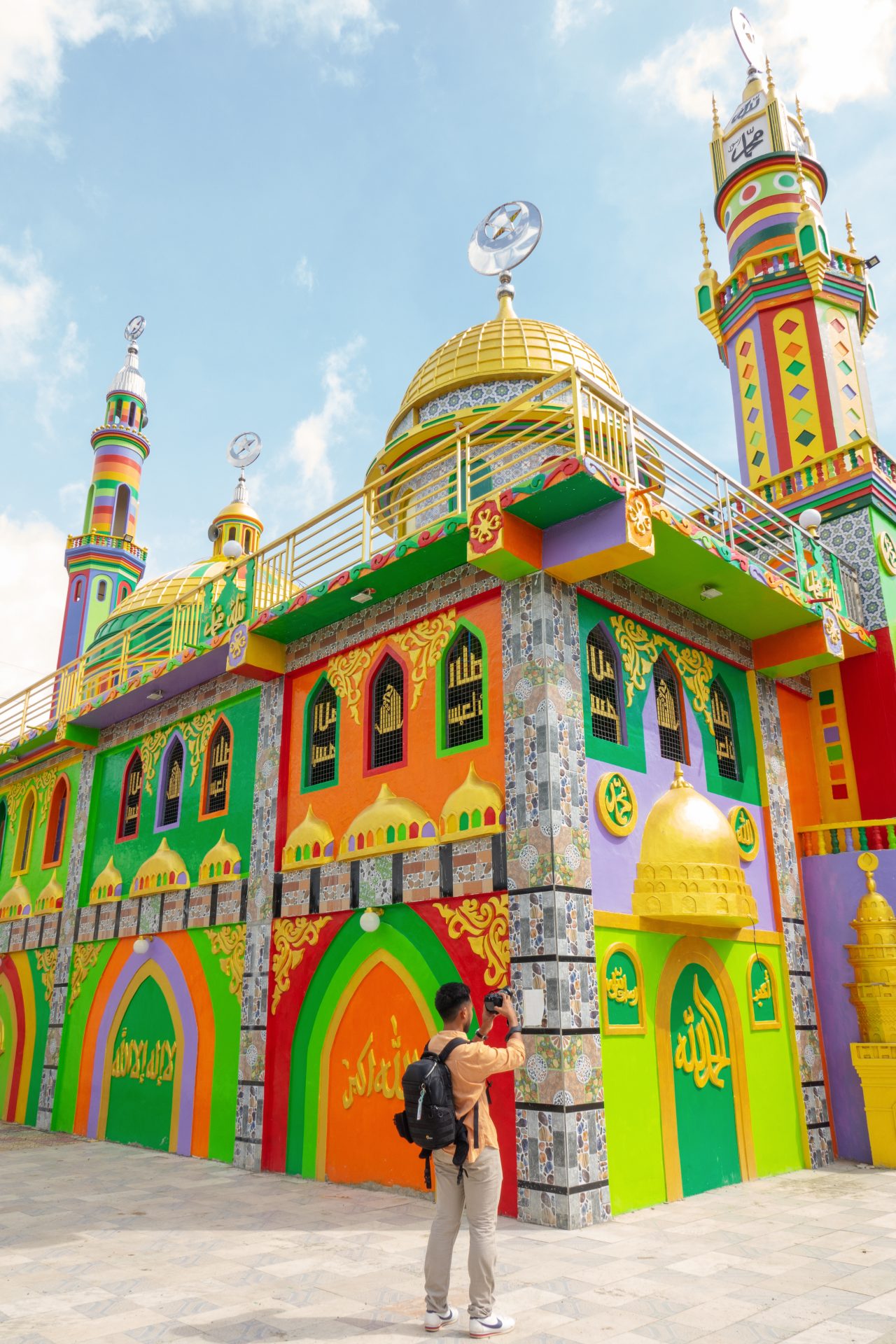 The Rainbow Mosque’s vibrant exterior symbolizes peace and unity. Photo by Playground Films PH courtesy of the Department of Tourism.
It is a distinctly Maranao mosque with the intricate okir or okil that adorn the structure and its interior. Okir is the term for rectilinear and curvilinear plant-based designs, folk motifs, and Arabic geometric figures used primarily by the Maranao.
These patterns are often rendered in hardwood, brass, silver, and even in wall paintings. The Maranao, the largest of the Muslim cultural-linguistic groups of the Philippines, are known for their artistry and refinement in rendering okir.
Santa Isabel de Portugal Cathedral, Isabela de Basilan
The cathedral was first built in 1850 by Augustinian Recollects. Since then, it saw through a fire, two earthquakes, and most recently a bombing in 2010.
The centerpiece is the huge mosaic at the main altar. It depicts Jesus Christ and his disciples minus Judas Iscariot. The 13th figure is Spanish architect priest Fr. Maximo Cerezo who designed the new structure of the cathedral after it was razed by a fire.
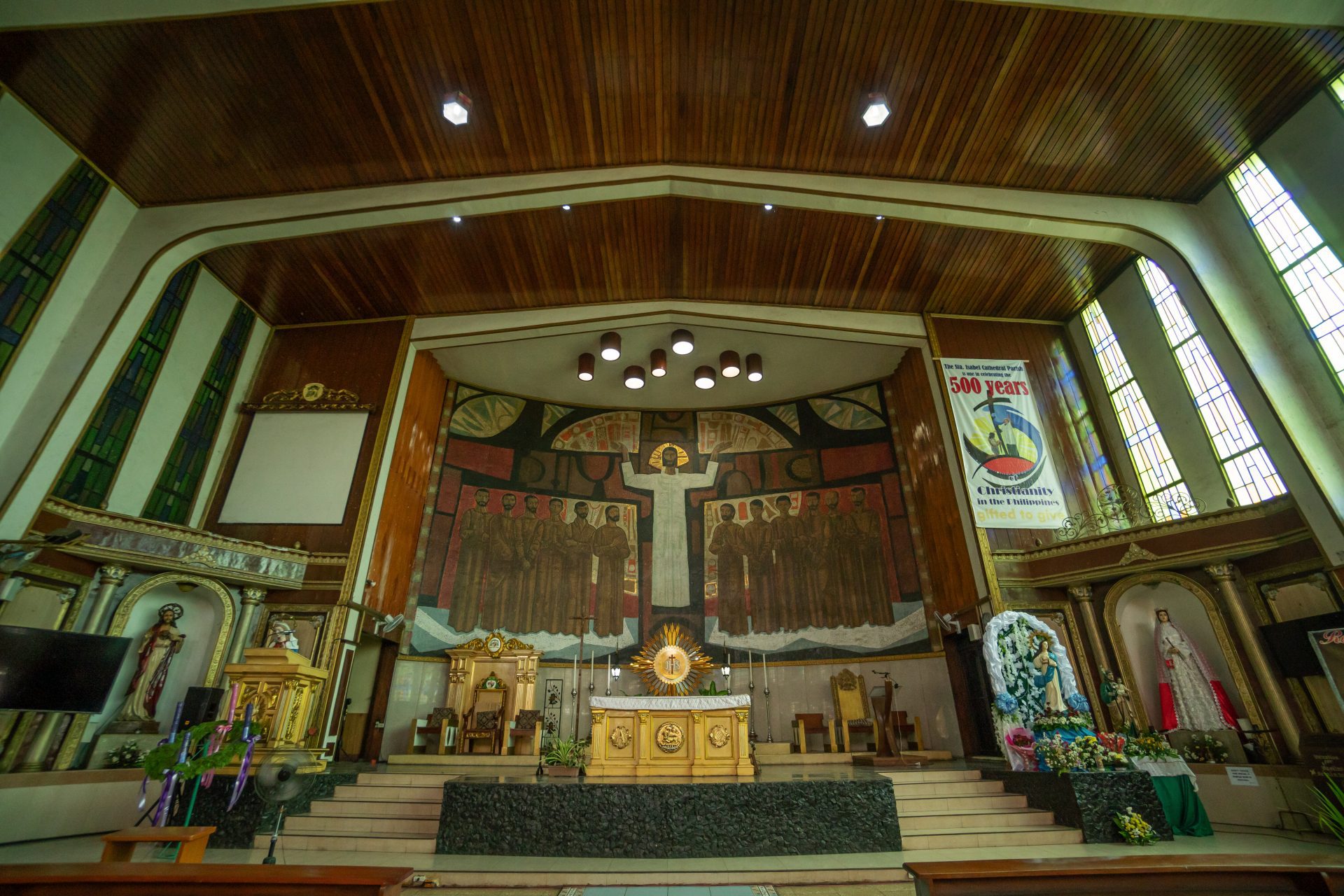 The centerpiece of Santa Isabel Cathedral is the huge mosaic at the main altar. All of the materials used were sourced from Spain. Photo by Playground Films PH courtesy of the Department of Tourism.
Every stone used in the mosaic was sourced from Spain as well as the jewelry used in Jesus’ halo which is made of pure gold.
Also remarkable is the cathedral’s dalle de varre (French for ‘slab of glass’) on its eastern façade. The colorful stained glass is considered one of only a handful of such kind in Philippine church architecture.
Similarly notable is the church’s brise-soleil (literally ‘sun-breaker’ in French) architecture. Its grill work motif functions as a shading and ventilation system to manage the amount of sunlight and air streaming into the interior.
Getting there
- Zamboanga City – As a major port city, it serves as one of the main transportation hubs of Mindanao and is easily accessible by land, sea, and air.
There are daily flights to the Zamboanga City International Airport from Manila and Cebu via Philippine Airlines and Cebu Pacific. Cebu Pacific also has flights from Cebu, Cagayan de Oro, and Davao.
Daily buses from Dipolog, Dapitan, Pagadian, Ozamiz, Cagayan de Oro, and Iligan take travelers to Zamboanga City. Bus travel from Cebu and Bacolod is also possible with a RORO ferry connection.
Ferries bring passengers every Sunday from Manila. There are also passenger ships sailing from Cebu, Dumaguete, Davao, Dipolog, Iloilo, and General Santos.
You can reach Zamboanga City by car if you are coming from Pagadian, Cotabato, Davao, General Santos, and Surigao.
- Dipolog and Dapitan – There are regular commercial flights to Dipolog from Manila.
There are daily buses from Zamboanga City to Dipolog and Dapitan.
- Isabela de Basilan – Access to Isabela de Basilan is usually through Zamboanga City. From there, a 1 hour and 45 minute ferry ride will take you to Isabela de Basilan. The fare ranges from Php20 (student and senior citizen’s discounted fare on some conventional ferries) to P70 (first-class w/ aircon). Visitors can also take a “Fast Craft” which only takes about 45 minutes.
Contact the transport station or the tour agencies listed below for the update schedules and status.
Outsource the Planning
For a seamless trip, you may leave the planning to DOT’s accredited tour operators in Region 9:
Zamboanga City and Isabela de Basilan
(062) 991-1174 / 0917-722-6410; [email protected]
09062087106; [email protected]
(062) 990-2100; [email protected]
09177103094; [email protected]
Zamboanga del Sur
0930-061-1690 / 0997-745-2957; [email protected] or [email protected]
For travel to Zamboanga del Norte or Zamboanga Sibugay, you may reach out to any of the agencies above.
Travel safely!
All tourist destinations in Zamboanga Peninsula have health and safety protocols in place to protect locals and visitors alike. Everyone is expected to comply by wearing face masks, regularly washing their hands, and practicing physical distancing.
To check out up-to-date information regarding local destinations that are open and the safety protocols and requirements needed for each location, you may visit www.philippines.travel/safetrip or download the Travel Philippines app at app.philippines.travel or the Google Playstore.