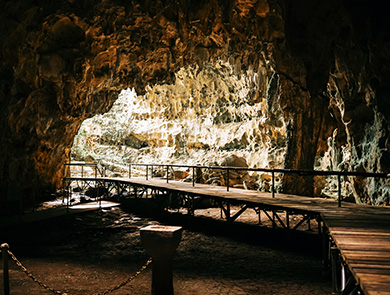
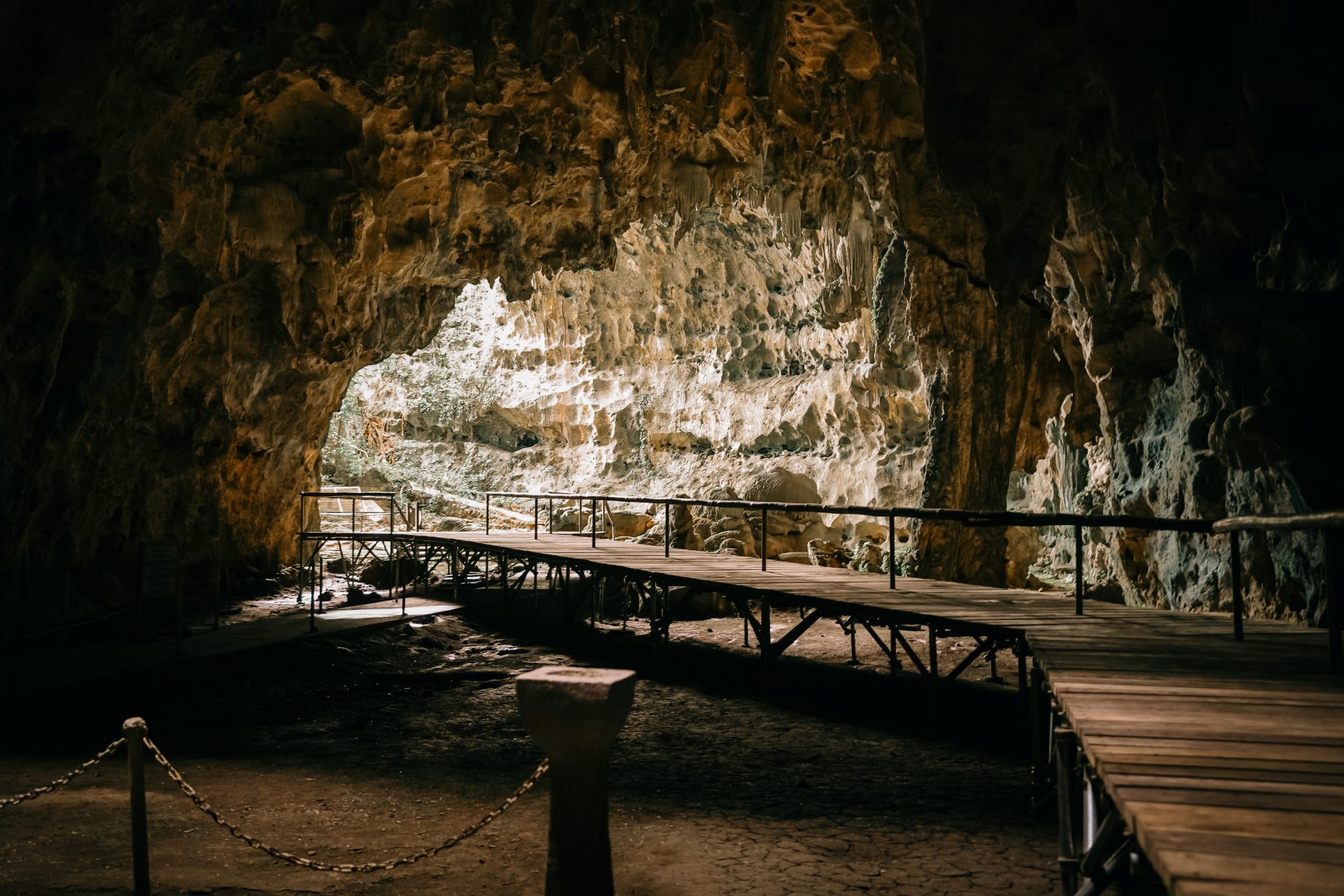
 The magnificent limestone formations seen inside Callao Cave. Photo by SinoPinas courtesy of the Department of Tourism.
Much of Cagayan’s tourist attractions involve immersive experiences with nature. That’s because the province’s location is bounded by the Philippine Sea to the east, Isabela to the south, Cordillera Mountains to the west, and the Balintang Channel and the Babuyan Group of Islands on the north.
Within its expansive land, Cagayan is teeming with many of nature’s wonders, one of which is Callao Cave.
Located in the western foothills of the Sierra Madre mountain range, the limestone cave is one of the 300 found in Barangays Parabba and Quibal in Penablanca. These caves are the reason why the town got its Spanish name which, when translated, means white rock.
Though it’s likely that locals have long been frequenting the cave, Theodore Roosevelt, Jr., then American Governor-General, is the first notable figure to visit the cave in 1932. His presence in the area essentially gave way to its documentation. In 1935, under his term, Callao Cave and the 192-hectare area surrounding it became a national park, one of the earliest in the country.
During the Japanese occupation, it is also believed that the locals of Penablanca stayed and hid inside Callao Cave because even the smoke coming from firewood used for cooking was never visible from the outside.
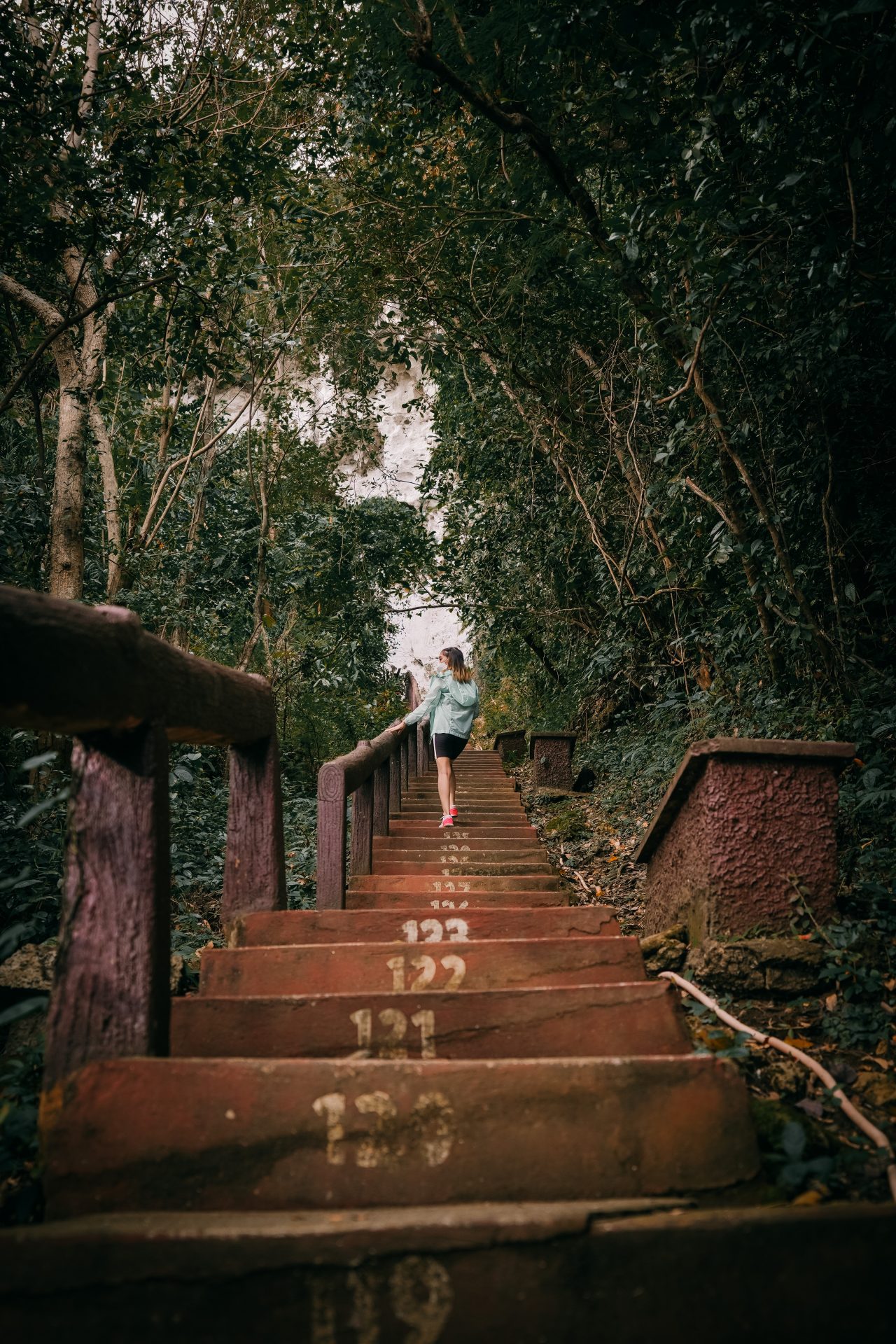 Stairs going up to the Callao Cave. Photo by SinoPinas courtesy of the Department of Tourism.
Today, the cave—named after the Kalaw bird endemic to the Sierra Madre—is part of the enlarged 118,000-hectare, present-day Penablanca Protected Landscape and Seascape.
Most recently, the National Museum officially declared the cave as an important cultural property of the Philippines for the exceptional cultural, artistic, and historical significance of the discoveries inside it.
But what exactly makes Callao Cave such a significant piece of natural property? A tour inside can help answer that.
Inside the Cave
A quick briefing from a tour guide at the site’s entrance and providing personal information on their logbook is followed by a 184-step trek to the first of the cave’s seven chambers.
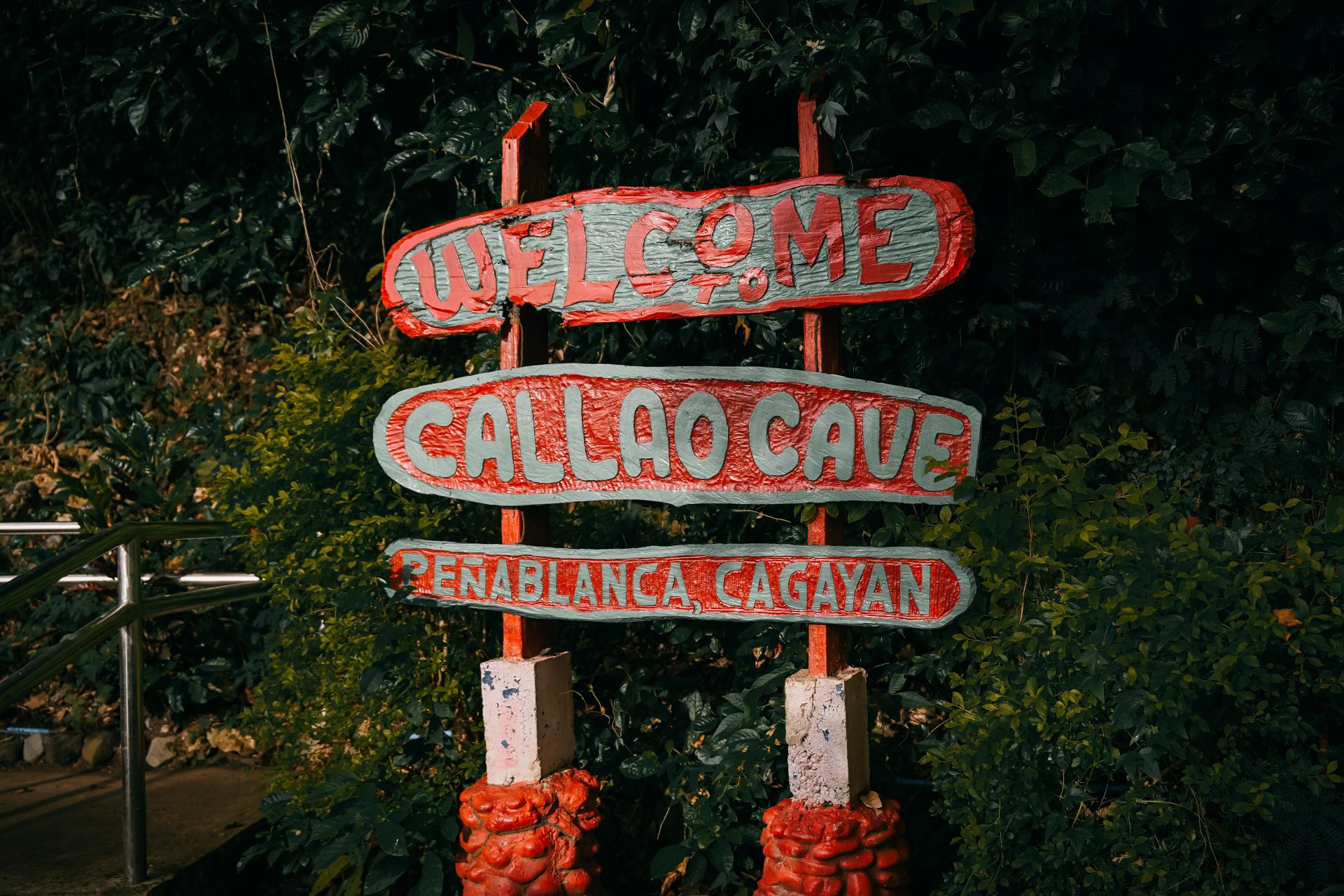 A rustic signpost that greets each visitor before they enter Callao Cave. Photo by SinoPinas courtesy of the Department of Tourism.
The first chamber, the Aviary Room, is the largest of all seven, with a width of about 50 meters and a height of 36 meters. As the name implies, it is home to birds, specifically the balinsasayaw or swiftlets.
“The nest of the swiftlets are used to make bird’s nest soup,” says Trisha Labonera, a volunteer tour guide. “Here in Penablanca, harvesting this is not allowed as this is a protected area.”
Just a few steps ahead is a place of worship unlike any other in the cave’s second chamber. Aptly named The Chapel, a rock formation serves as the altar featuring an image of Our Lady of St. Lourdes, while a natural skylight brightens up the chamber lined with pews.
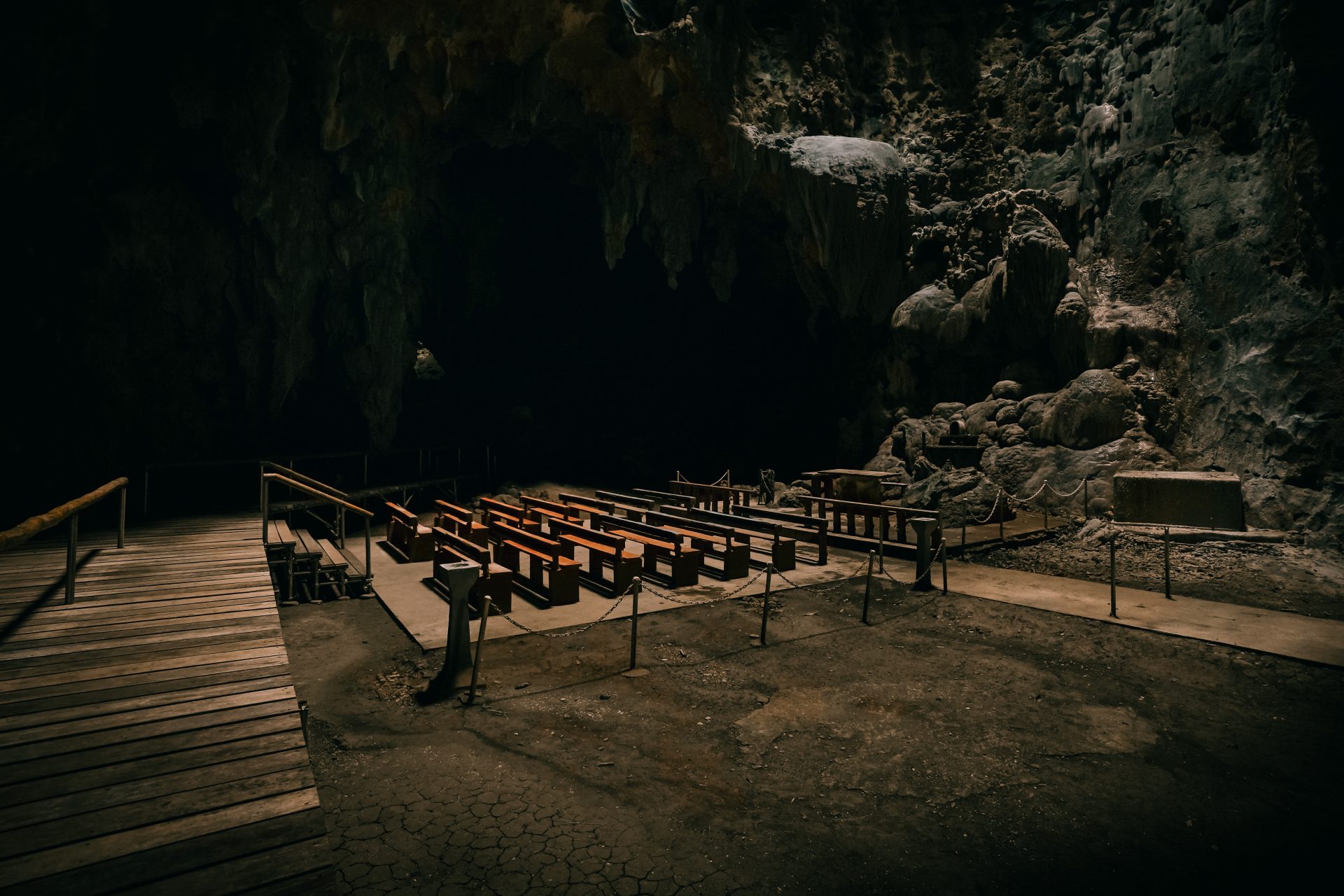 The chapel is one of the unique offerings that Callao Cave has for tourists and locals alike. Photo by SinoPinas courtesy of the Department of Tourism.
Pre-pandemic masses here are held every first Saturday of the month. Wedding ceremonies and prenup shoots have been held here, as well as movie shoots like Bea Alonzo and John Lloyd Cruz’s The Mistress. Events in the area can be booked upon coordination with the provincial tourism office.
Stalactites, or icicle-shaped formation that hang from the ceiling, and stalagmites, or an upward-growing mound of mineral deposits, become more prominent as the tour moves to the third chamber.
Called The Dark Room, this area of the cave rarely gets any light. What little amount of light it gets from the second chamber, however, makes some flowstones, glittering dripstones, cave curtains, crystal helictites, and columns sparkle brighter. These crystallizations, according to Labonera, is an indicator that it’s a living cave.
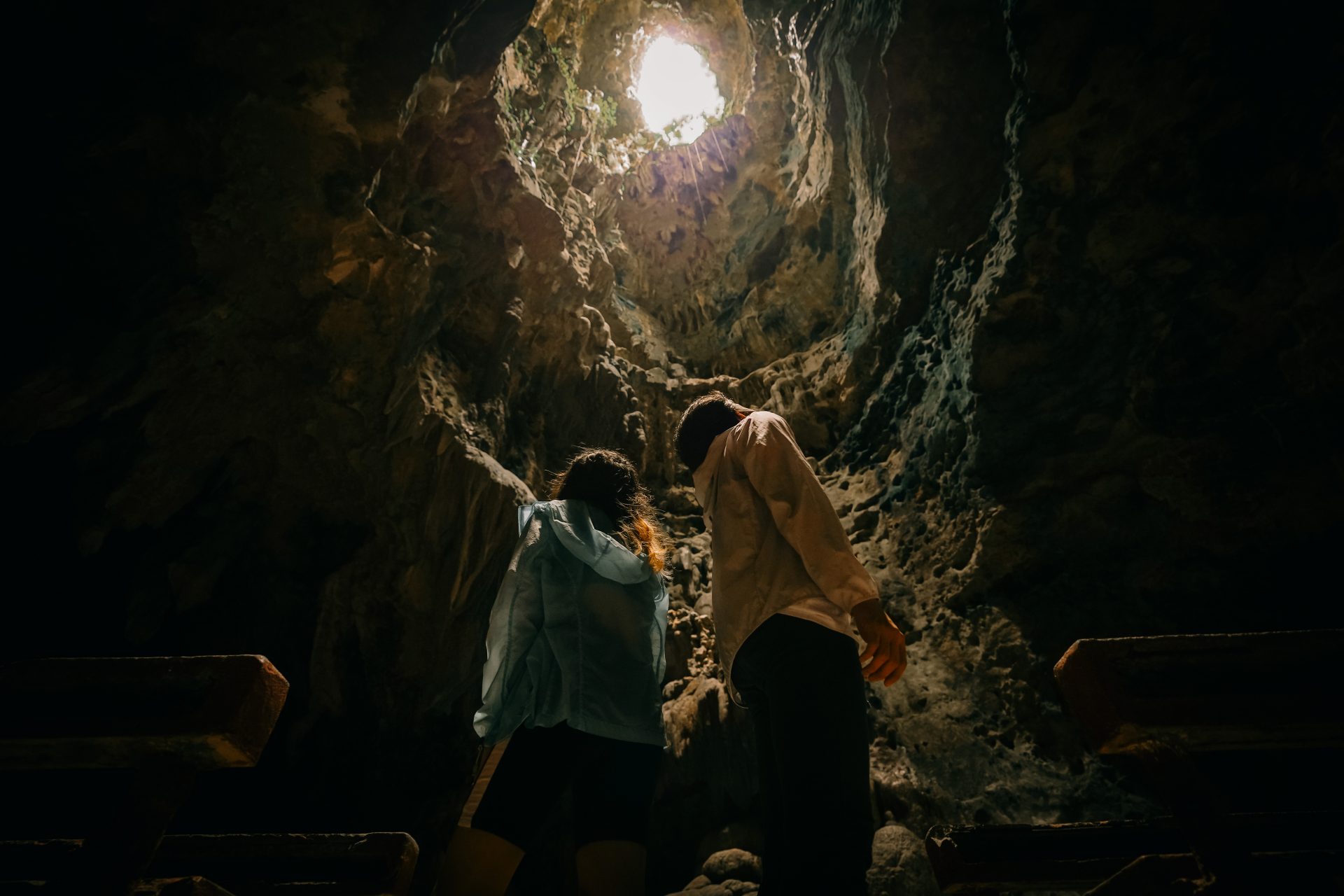 The cave’s skylight gives light to the chapel. Photo by SinoPinas courtesy of the Department of Tourism.
“Because of the cave’s closure to tourists, the area and the formations inside remained undisturbed,” Labonera says. “We became stricter, too. Touching the formations is not allowed anymore.”
A steep climb leads to the fourth chamber—and the highest point—of the cave called Cream Room. It got its name from the most prominent formation in the said chamber that resembles a melting ice cream. It’s made more visible through the cave’s second natural skylight.
Other notable formations at the fourth chamber include what seems like the head of an elephant, a lighted candle, and a heart-shaped stalactite.
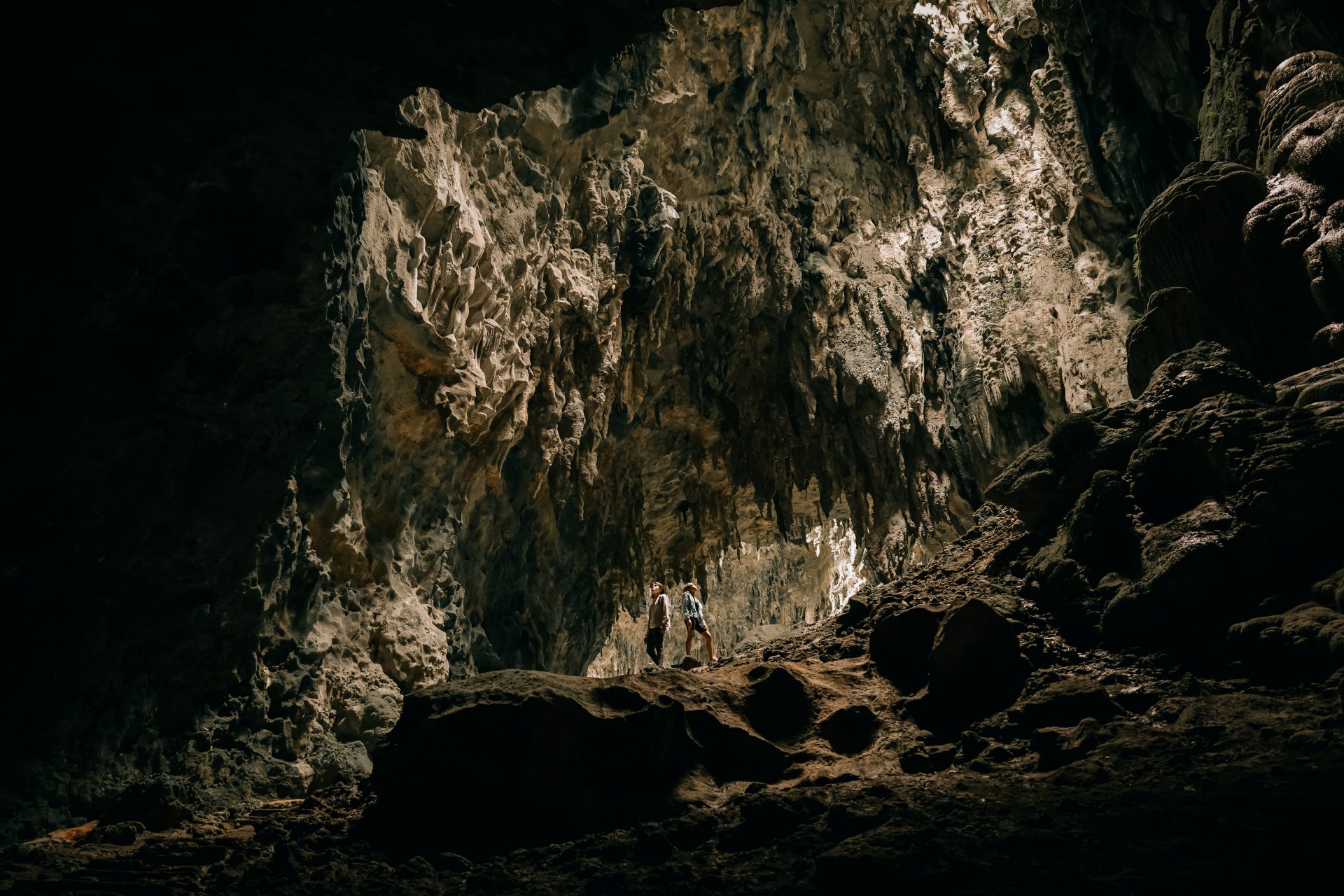 Callao Cave’s fifth chamber. Photo by SinoPinas courtesy of the Department of Tourism.
The fifth chamber, called The Jungle, is teeming with plants while another natural skylight brightens up the area.
But there’s no shortage of interesting formations here, which includes a mushroom-shaped and coral reef-like stalagmites, and even a skeletal system’s skull, eyeball, nose, and mouth. Singapore’s famous Merlion figure has seemingly found its way inside Callao Cave, too, except there’s no water coming out of its mouth.
Meanwhile the sixth and seventh chamber, called The Danger Zone and The Dead End, respectively, are now off-limits to visitors for safety. From the fifth chamber, however, the remaining two chambers feature more rock formations and patches of greenery.
Fossil discoveries
But perhaps the most compelling part of the tour is seeing the archeological sites in the first chamber, where a 67,000 years old human fossils—including seven teeth and six bones from the feet, hands, and thigh of at least three individuals—were found back in 2007.
In 2019, the discovery from a seven-meter deep excavation, made by Filipino archaeologist Armand Mijares and a team from the University of the Philippines, was confirmed to belong to a previously unknown and now extinct human subspecies. It was named after its discovery site— Homo luzonensis or Callao Man.
This year, not too far from the area where human fossils were found, Mijares and the team found fossils yet again—this time, a previously unknown giant rodent called cloud rat or locally called buot or bugkon.
“They’re unlike the rats we see in houses,” Labonera shares. “These can be likened to squirrels living in trees and their tails can grow up to 13 inches long.”
These cloud rats are believed to have lived alongside Homo luzonensis , but two species went extinct 2,000 years ago.
Bat flights
After the Callao Cave tour, which usually takes 45-minutes to an hour and costs Php 50 for the entrance fee, visitors are encouraged to try another activity in the area—watching colonies of bats fly out of a cave.
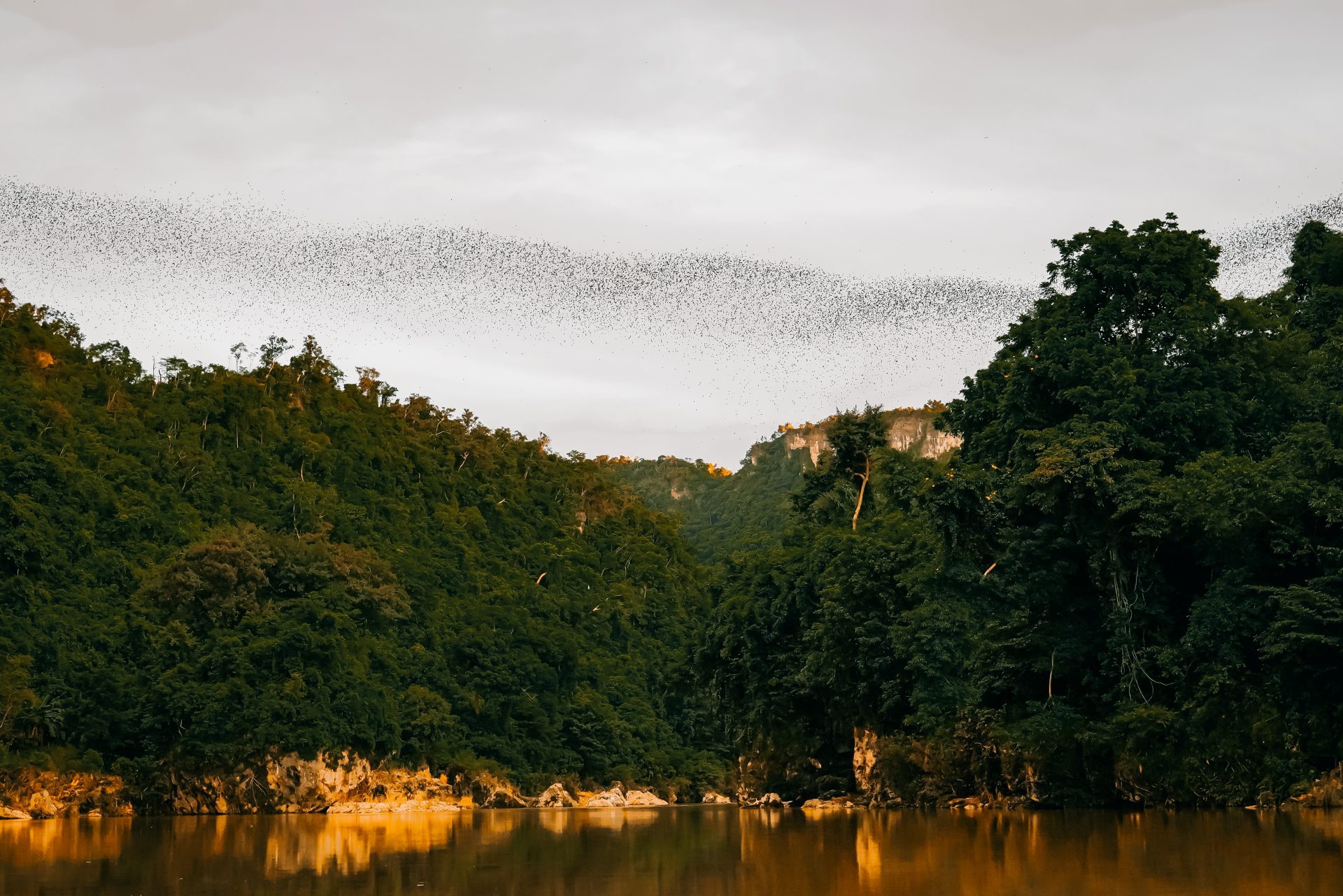 A sight to behold: a view of bats flying out of the cave. Photo by SinoPinas courtesy of the Department of Tourism.
The bat population in the area, which primarily feeds on insects, are estimated to be in the millions. Some days, according to Labonera, the bats don’t show up but when they do, they put on a show. Colonies of bats can be seen flying in synchrony, left and right for more or less 15 minutes.
The bats usually fly out the cave at dusk and it’s advisable to board a boat at least 20 minutes prior to ensure that bats can be seen in action or if near the cave entrance, one can lie by the riverbank while watching the circadian flights.
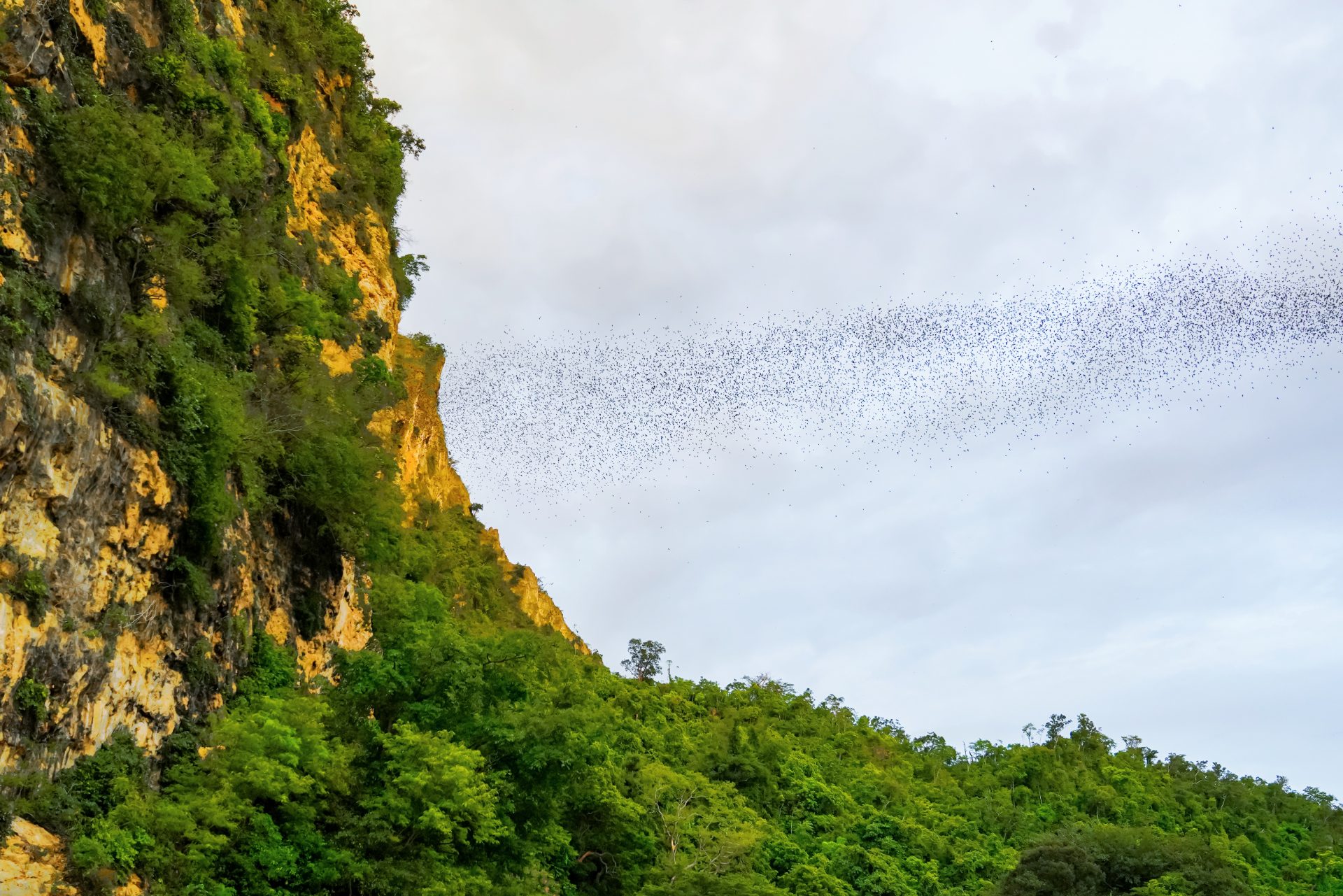 This colony of fruit bats usually leaves the cave at 5:00 PM. Photo by SinoPinas courtesy of the Department of Tourism
Boating back at dusk, guests can enjoy the sight of the Pinacanauan river, one of the seven tributaries of the Cagayan River. The phenomenon is worth more than the 500-peso they charge for a boat ride.
Empowering locals
Both experiences wouldn’t be possible without tour guides like Labonera.
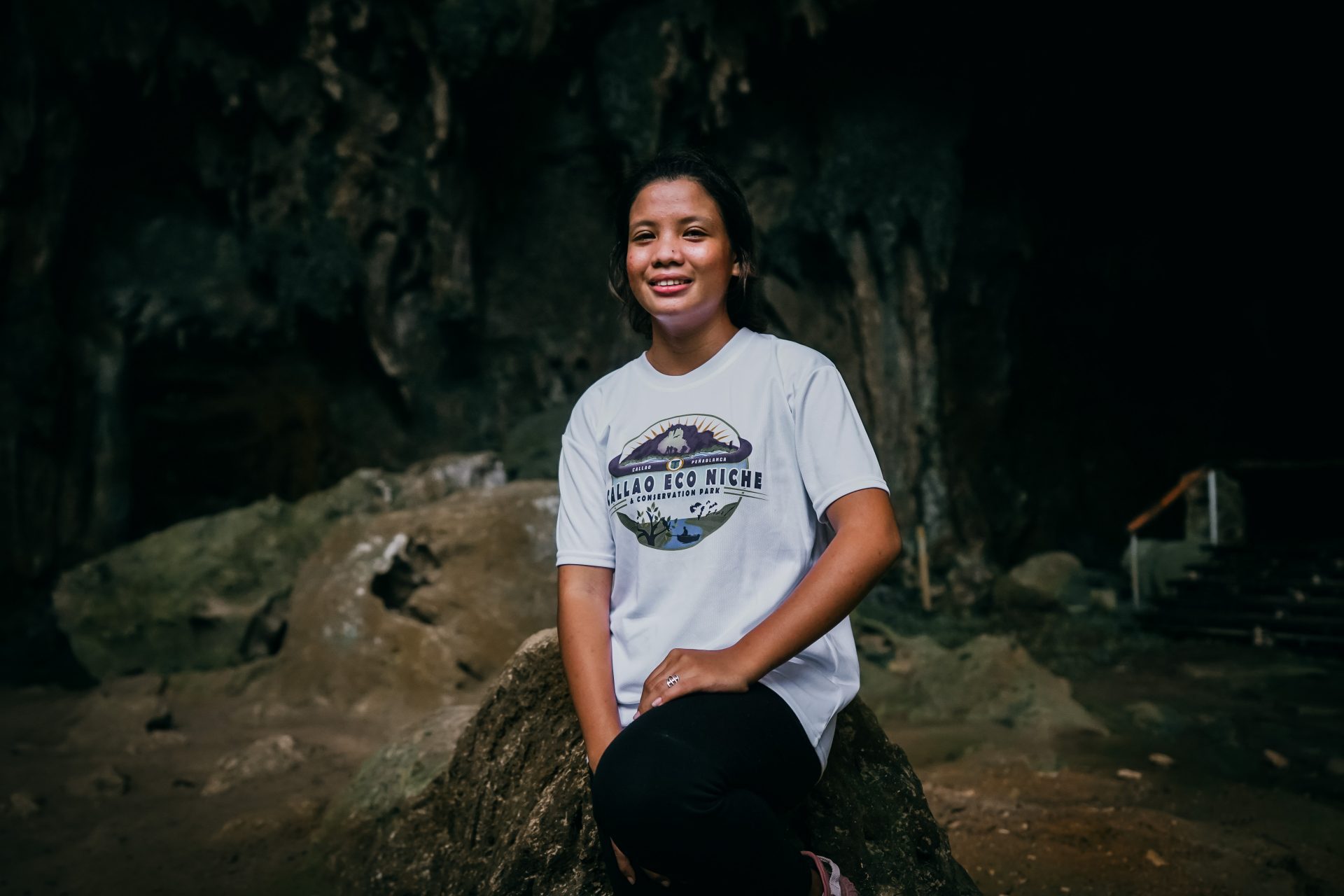 Labonera, a passionate local who has become a tour guide for visitors of Penablanca. Photo by SinoPinas courtesy of the Department of Tourism.
A local born and raised in Penablanca, she began guiding tourists in Callao Cave and the Pinacanauan river when she was just 16. Now at 21, she continues to share the wonders of Penablanca to visitors.
Labonera, along with other volunteer guides, participated in multiple free trainings the provincial government of Cagayan provided where they learned basic mountaineering, rappelling, and first aid response.
This is so that they remain ready and become even more equipped as tour guides once Callao Cave opens to tourists again. Exploring Callao Cave, after all, is only allowed with a tour guide to make sure that the rock formations remain untouched and the cave remains protected.
Plans
The Penablanca Protected Landscape and Seascape (PPLS) is under the jurisdiction of the Department of Environment and Natural Resources (DENR), it being a protected area. The Provincial Government of Cagayan has been granted a 60-hectare area under a Memorandum of Agreement, of which Callao Cave is part of.
The Department of Tourism Regional Office has facilitated the endorsement of the Ecotourism Management Plan and Business Plans of PPLS through the Regional Ecotourism Committee (REC) for the creation of tour packages in Callao Cave, in particular and Penablanca, in general.
Nothing has been finalized yet, the Provincial Tourism Office of Cagayan will likely include caving, kayaking, paddleboarding, rappelling, and camping, inclusive of breakfast, lunch, snacks, and access to a wash area.
Initial ideas suggest that every group of four tourists should be accompanied by four guides—two inside the cave and two while watching bat flights.
“There’s no fixed plan and price yet,” she says. “The provincial tourism office is still developing it at the moment.”
Meanwhile, Labonera and a number of other tour guides have been inoculated with COVID-19 vaccines.
What to prep
As early as 5 AM, Callao Cave is already open for visitors to explore, along with their tour guides.
Though there are stairs on the way to the cave’s entrance, it’s still a steep climb at 184 steps. Once inside the cave, expect an uneven ground surface that, on rainy days, gets muddy and slippery.
This is why Labonares highly recommends stretching beforehand, as well as wearing light, comfortable clothes and trekking-appropriate footwear. It’s best to bring a bottle of water and a change of clothes, too.
How to get there
To get to Callao Cave, ride a Tuguegarao City-bound bus along Cubao or Buendia. Cagayan’s capital is 485 kilometers away from Metro Manila, so land trips are typically 10-12 hours long. For faster travel time, book a 45-minute flight to Tuguegarao airport.
Labonera says it’s best to take the 30-minute ride to Callao Cave from Tuguegarao City via a car, but an alternative mode of transportation can be a tricycle for a 400-peso or more round trip.
Just make sure to download the Traze app and bring a vaccination card as these are requirements in any airport terminal and when entering Tuguegarao, respectively.
Outsource the Planning
For a seamless trip, you may leave the planning to DOT’s accredited tour operators in Cagayan:
Pink Diamond International Travel and Tours
(078) 305 0339, 0926 324 4702
Travel safely!
All tourist destinations in Cagayan have health and safety protocols in place to protect locals and visitors alike. Everyone is expected to comply by wearing face masks, regularly washing their hands, and practicing physical distancing.
To check out up-to-date information regarding local destinations that are open and the safety protocols and requirements needed for each location, you may visit www.philippines.travel/safetrip or download the Travel Philippines app at app.philippines.travel or the Google Playstore.